Showing posts with label Finance. Show all posts

1 Year After The Falls - Part III: Spending

|


Headlines:
  1. Retail Sales rise 2.7% in August - Sep 15, 2009 | money.cnn.com
  2. Retail Sales rise beyond expectations - Sep 15, 2009 | cbsnews.com
  3. Retail Sales increase by largest amount in 3 years - Sep 15, 2009 | blog's carpediem


Opinion: With 70% of GDP is PCE (personal consumption expenditures) Uncle Sam's health is tied to American's spending; signal by retail sales which has been reported as good number. The more consumers get back to markets, the bigger uncle sam's pocket. Retail Sales reflects the current state of the economy, meanwhile, serves as predictor of inflation. Thus, the high-jump figure would trigger the action of Fed in tightening monetary policy (hike rate and shrink money). Time of Crisis has past, now comes Era of Inflation (as a friend of Growth).

Again, chart with FusionCharts using data from BEA


1 Year After The Falls - Part II: Wealth

|


From: CNBC
Special Report: The Crisis - 1 Year Later

...and unique special report, CNBC uncovers the truth behind the crisis all the way back its roots in 2001, and how greed brought the global financial system to its knees...


Headlines:

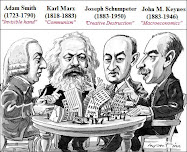
Opinion: Thanks to rising of equity plus housing markets and learning of savings (not spending by credit debt), people's vaults are getting bigger. And the simple truth: the more money earned, the more money spent; which in turn would create the wealth to the nation. Remember this: "By pursuing his own interest he frequently promotes that of the society more effectually than when he really intends to promote it - Adam Smith."

Chart with Fusioncharts:


1 Year After The Falls - Part I: Banks

|


From: BBC
Global recession timeline
BBC's full coverage of the anniversary of the global financial meltdown

How did the credit crunch at the end of 2007 become a full financial meltdown by the middle of 2008, and finally turn into a global recession?
This interactive timeline highlights key dates in the financial collapse and helps you find the original reports of the events as they happened.


The Big Get Bigger


From: WSJ
The Fed’s balance sheet expanded again in the latest week, rising to $2.125 trillion from $2.072 trillion, but the increase came primarily from purchases of mortgage-backed securities, Treasurys and agency debt


Opinion: If banks get more deposits meaning they could make more loans. In other words, credit market is evolving eventually, thus businesses would be able to raise more capital investing in news projects, creating more jobs, and so on. The end of the way, economies are better off and people smile :).

Here is a chart help by FusionCharts Gadget with data from SEC Edgar:

"Down with Debt"

|

HBR.org > July–August 2009

Selling to the Debt-Averse Consumer

by Eric Janszen

"...The Federal Reserve wants to reinflate the credit bubble and engineer a return to the old days. But that isn’t possible. When a nation’s businesses and households take on too much debt and the economy stumbles, the cash flow needed for financing dries up, defaults rise, and a vicious cycle of falling incomes, asset prices, and collateral values begins. That cycle ends only when asset prices, debt levels, and incomes get back into balance. Misuse of consumer credit is gone for good..."


"This recession marks the first recorded decline in household debt, ever."

Copyright © 2009 Harvard Business School Publishing Corporation. All rights reserved.

"Where Are We Now? Five Point Summary"

|

From: The Baseline Scenario

"1. Financial markets have stabilized – largely because people believe that the government will not allow Citigroup to fail...

2. The real economy begins to bottom out, although unemployment will not peak for a while and could stay high for several years...

3. More broadly, there is sophisticated window dressing in the pipeline but no real reform on any issue central to (a) how the banking system operates, or (b) more broadly, how hubris in finance led us into this crisis...

4. The consensus from conventional macroeconomics is that there can’t be significant inflation with unemployment so high, and the Fed will not tighten before late 2010...

5. Emerging markets are increasingly viewed as having “decoupled” from the US/European malaise...